07-2015
Mate – Rethinking the Schoolbook for Inclusive Education
Bachelor’s Thesis Supervision
Johannes Schäfer, Phoenix Design Stuttgart
Prof. Bernhard Schmid-Wohlleber, FH Magdeburg-Stendal
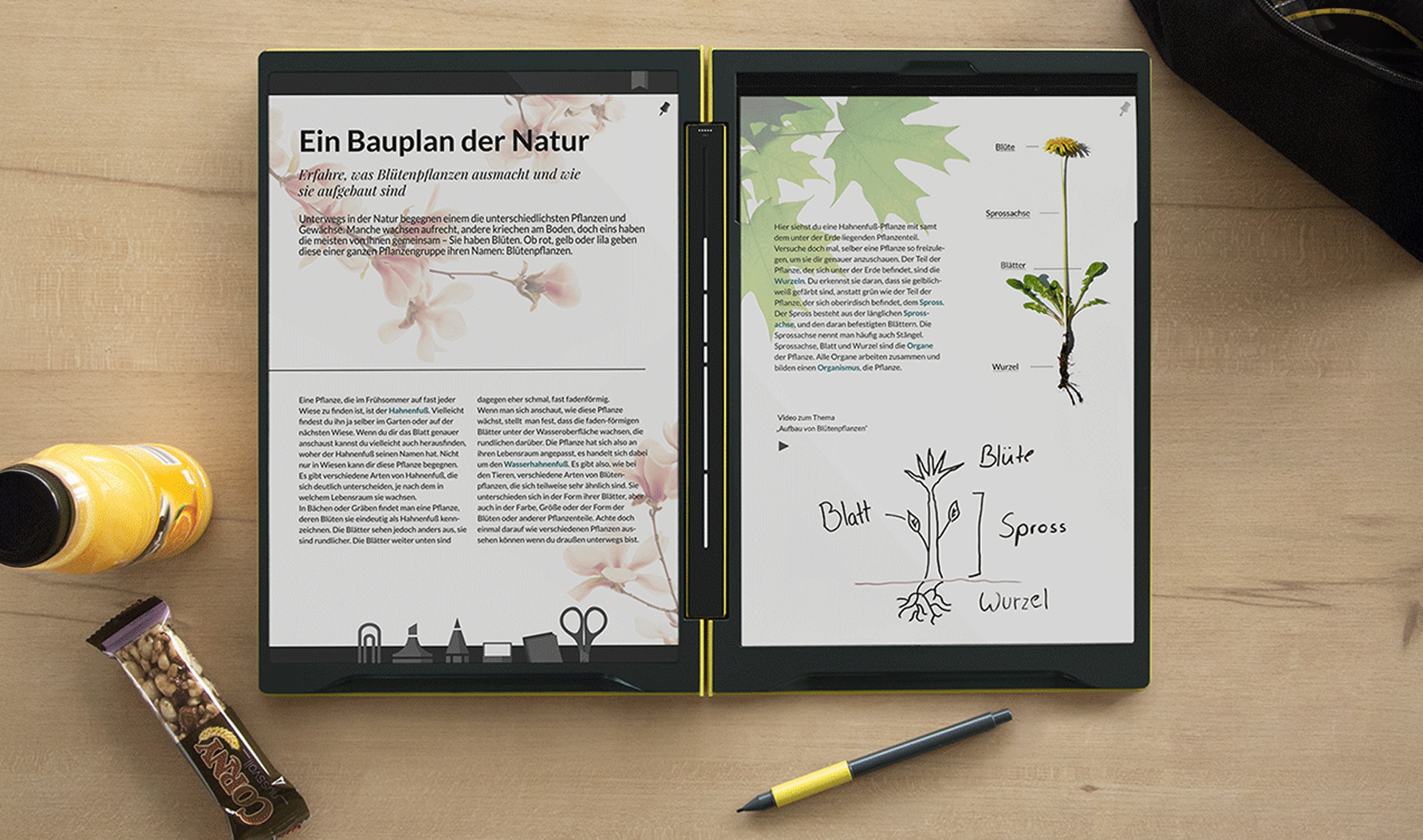
Mate is a speculative concept for a digital schoolbook designed to support inclusive learning environments. As inclusive education demands individualized support for diverse learning needs, traditional school media often fall short. Mate responds to this challenge by offering a flexible, adaptive, and engaging learning companion that encourages active participation and grows with students throughout their school years.
At the heart of Mate is an adaptive learning interface. Instead of rigidly structured material, the system adjusts the complexity, format, and pace of information delivery based on the learner’s profile. Drawing inspiration from magazine layouts and everyday tools like pens or scissors, Mate presents educational content in an accessible, engaging format. Students are encouraged to explore content through videos, audio, quizzes, and interactive exercises—fostering autonomy, curiosity, and motivation.
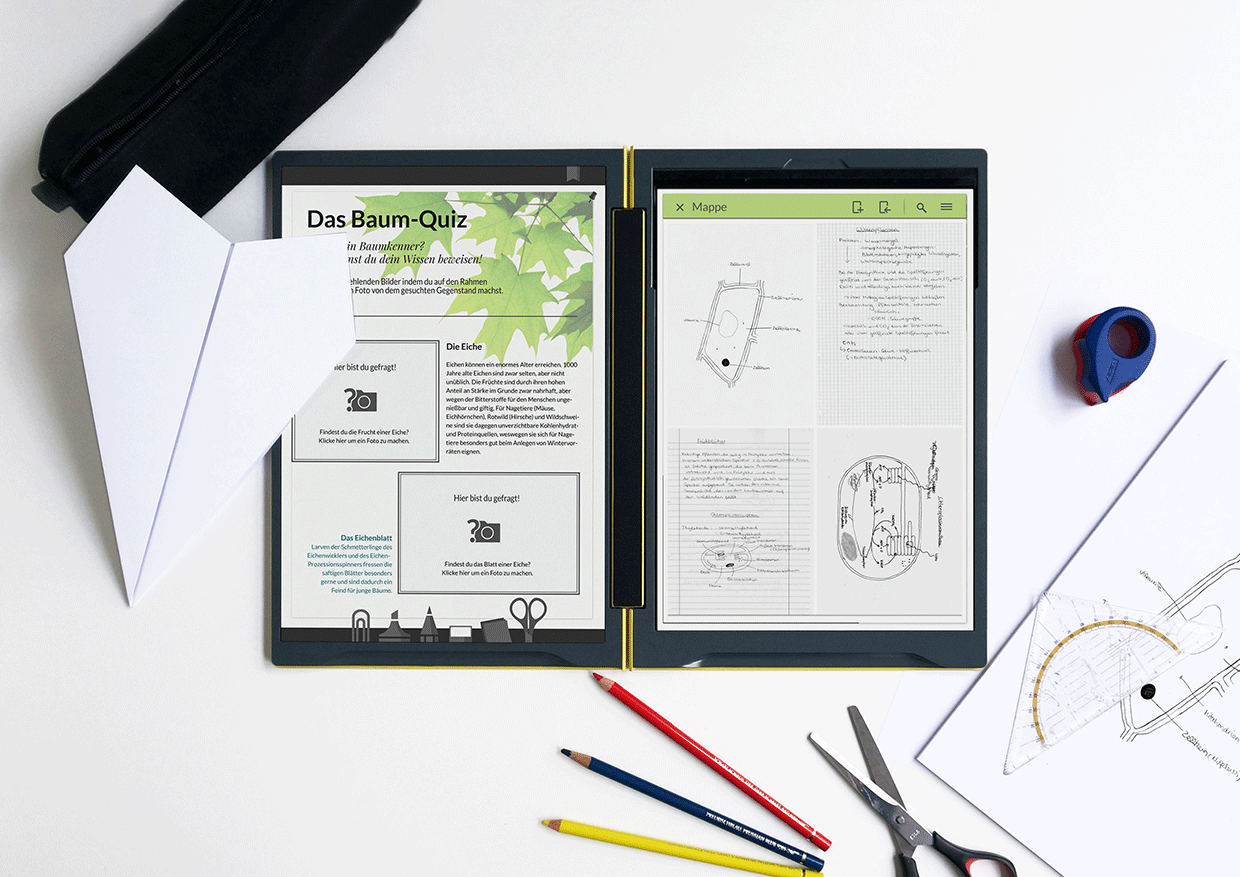
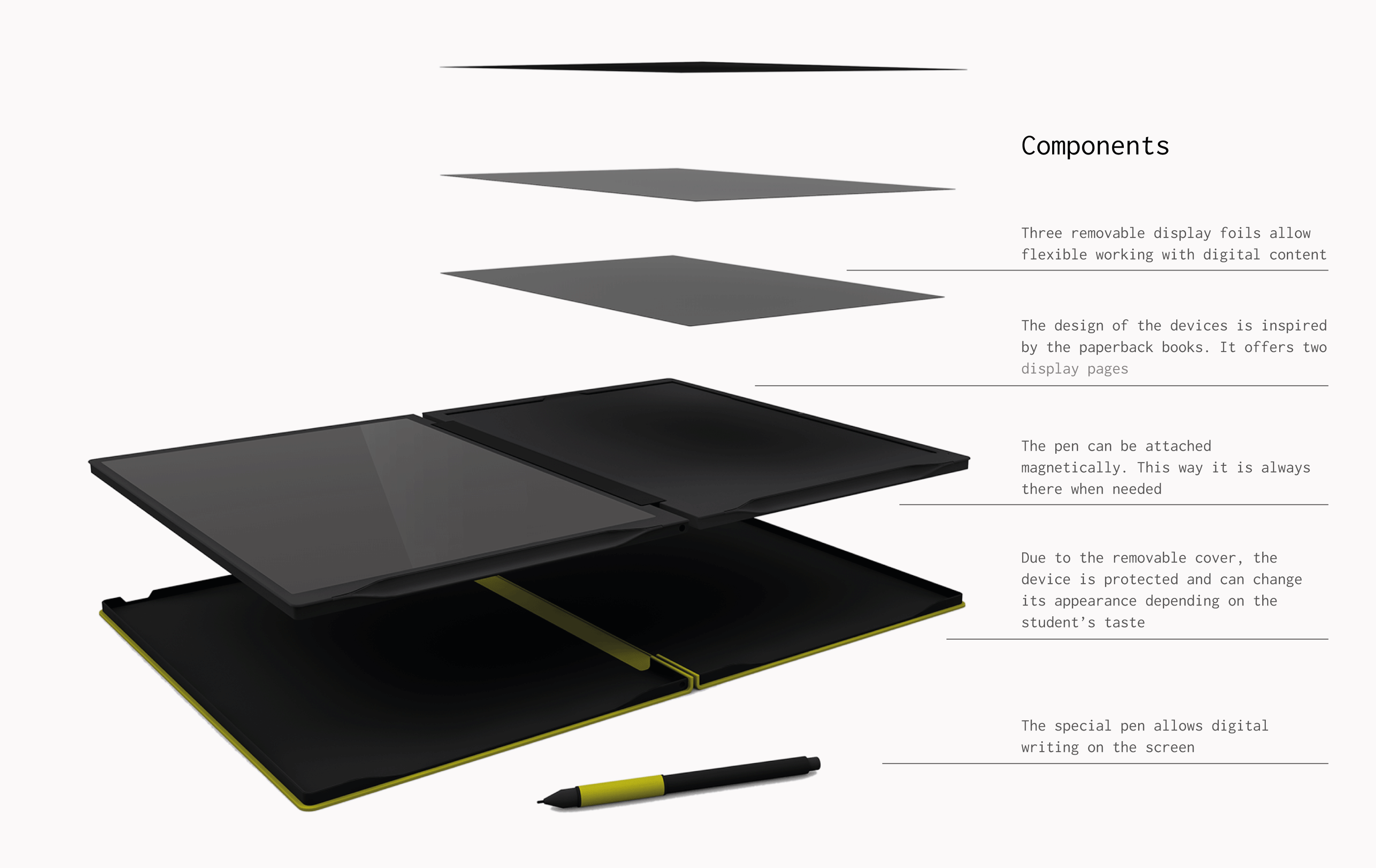
Physically, Mate retains the familiarity of a book while expanding its functionality. It features two foldable touchscreens for extended workspace, a stylus for handwriting, and an integrated camera that allows students to incorporate their surroundings into their digital learning environment. Analog-digital workflows are supported, with physical drawings or notes easily captured and edited within the system. This hybrid approach supports the development of fine motor skills and creative expression, bridging the gap between analog and digital learning.
Beyond individual learning, Mate also functions as a collaborative tool. A built-in communication platform enables real-time interaction between students and teachers, supporting group work, feedback, and peer learning. Teachers retain control over communication tools, ensuring a safe and focused classroom environment.
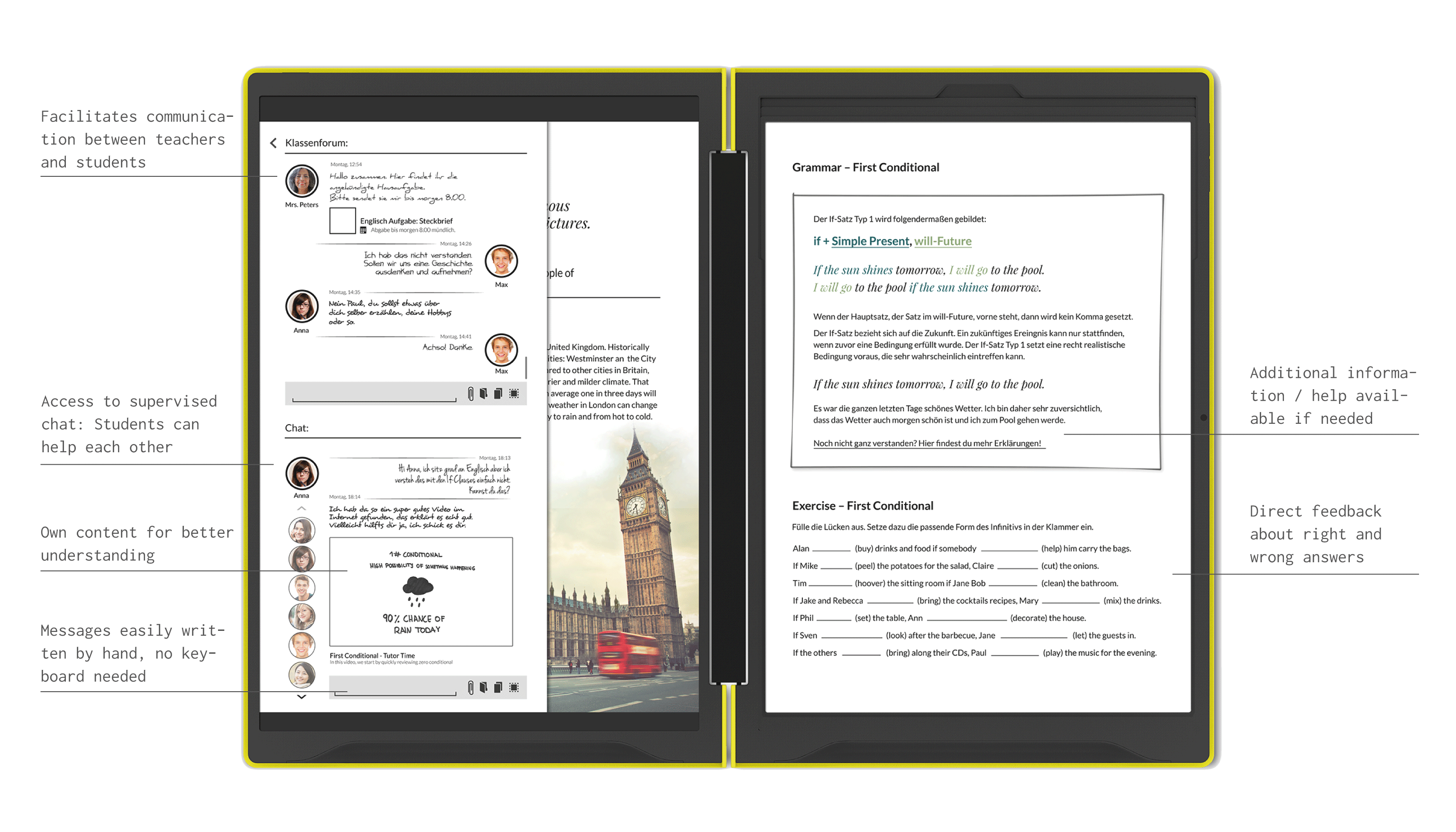
Mate empowers students to take an active role in shaping their educational journey. Through interactive quizzes, personalized assignments, and self-directed projects, learners can set personal goals and explore topics that resonate with their interests and needs.
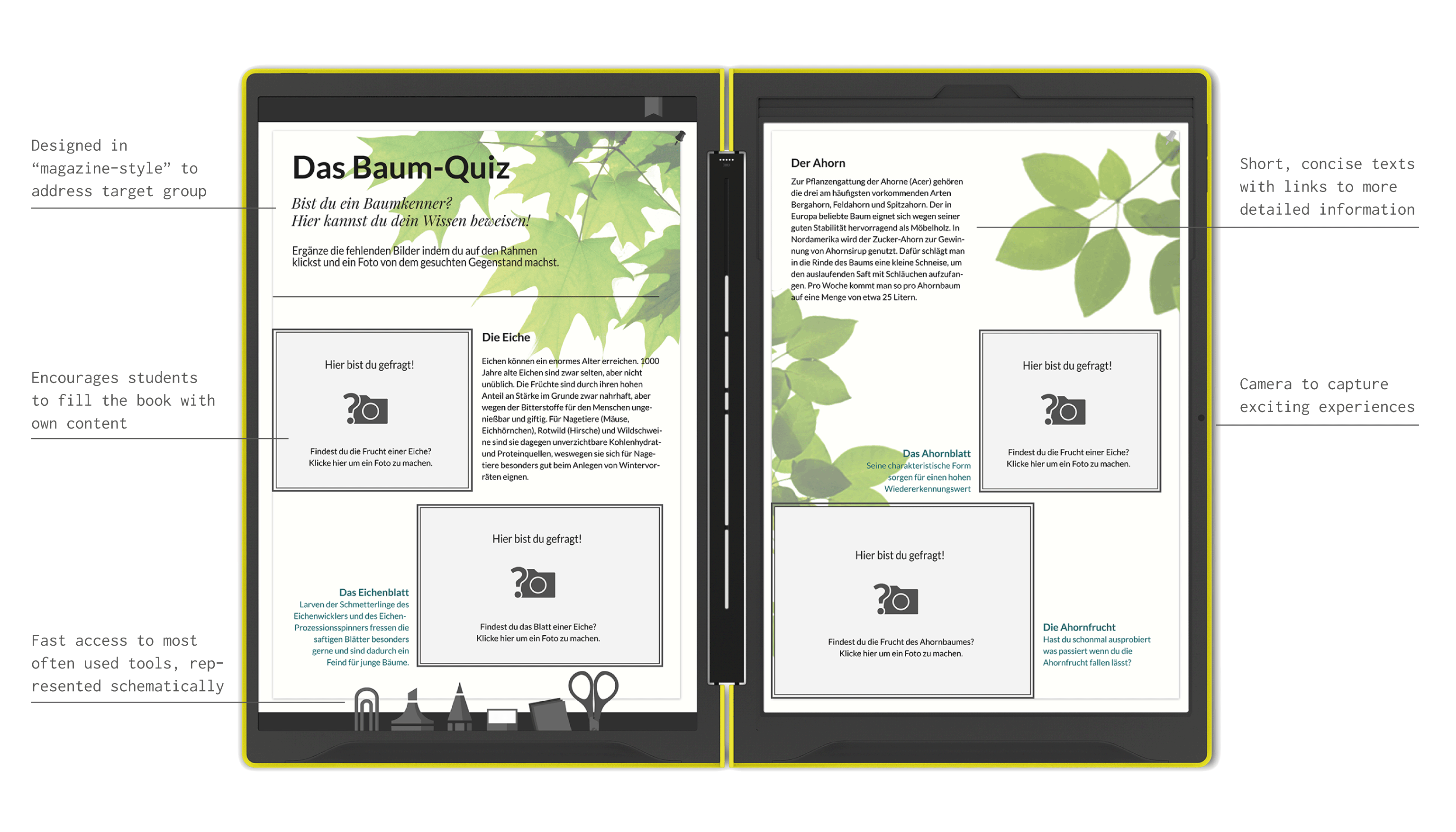
By combining adaptive technology with a student-centered design approach, Mate explores how digital schoolbooks could better support diverse learning needs. It aims to offer students more flexibility in how they engage with content, encouraging exploration and active participation within a structured educational framework.